
If you’re like us and love to read, then click here to score tons of free and discounted ebooks.
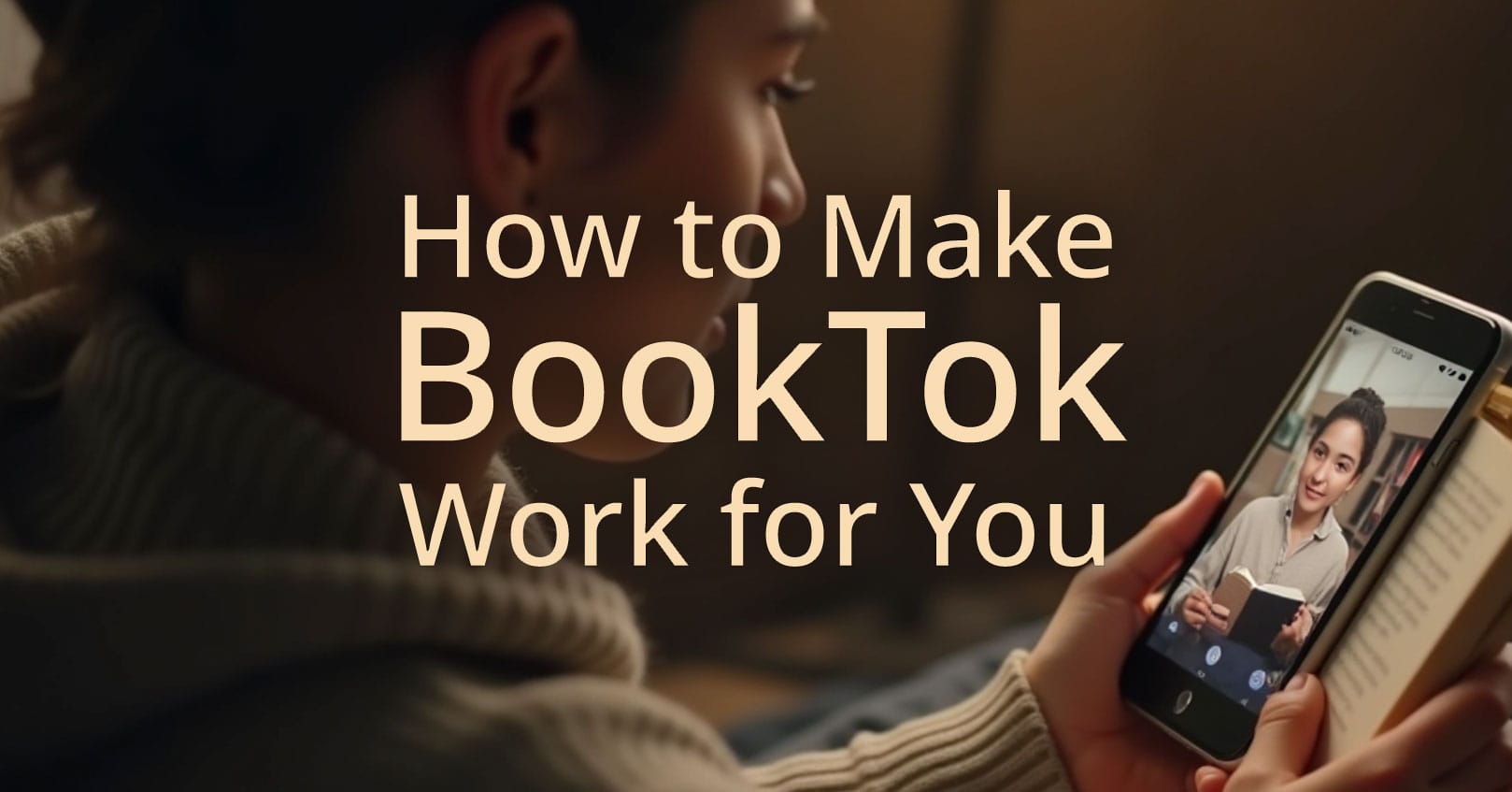
If you’re an author in 2026 and not at least aware of BookTok, you’re already behind the curve. TikTok’s book-focused ecosystem has reshaped discoverability in ways traditional marketing never could—turning backlist titles into bestsellers and unknown authors into overnight sensations.
But here’s the truth many posts gloss over: BookTok is not magic. It’s a tool. And like any tool, it works best when you understand how to use it—especially when deciding between organic reach and paid promotion.
Let’s break down what each approach actually does, when to use them, and how to avoid wasting time or money.
Understanding BookTok’s Power (and Its Limits)
BookTok thrives on emotion, authenticity, and speed. Readers aren’t looking for polished commercials—they want:
- gut-punch tropes
- raw reactions
- aesthetic vibes
- “this book ruined me” energy
The algorithm rewards watch time and engagement, not follower count. That means a brand-new account can go viral—but it also means success is unpredictable and short-lived unless you build momentum.
This is where the organic vs. paid decision matters.
Organic BookTok: Slow Build, High Trust
What Organic Promotion Looks Like
Organic BookTok relies on content you post yourself, such as:
- trope-based videos (“If you like X, read this”)
- character POVs
- mood boards and aesthetics
- author reactions to reviews
- behind-the-scenes writing moments
No money exchanged—just consistency, creativity, and patience.
Pros of Organic BookTok
- High reader trust: Viewers can sense authenticity instantly
- No financial risk: Perfect for debut or low-budget authors
- Long-term brand building: Followers who stay for you, not just one book
- Algorithm-friendly: TikTok often favors organic content over ads
Cons of Organic BookTok
- Time-intensive: Results rarely happen overnight
- Inconsistent reach: Viral success isn’t repeatable on demand
- Emotional labor: Being visible can feel draining for some authors
Timeline Expectations for Organic Growth
Most authors need 3-6 months of consistent posting (3-5 times per week) before seeing meaningful traction. The first 30 days are typically about learning what resonates. If you’re not seeing any engagement improvements after 90 days of genuine effort, it’s time to reassess your content strategy, not necessarily abandon the platform.
Best For:
- Debut authors
- Authors who enjoy content creation
- Long-term career builders
- Series writers building reader loyalty
Key tip: Organic BookTok works best when you post like a reader, not like a marketer.
Hook Formulas That Work
Start with these proven frameworks:
- Comparison hooks: “If you loved [popular book], you need to read . . .” (establishes immediate context)
- Controversy hooks: “Unpopular opinion: [trope] is actually . . .” (sparks debate and comments)
- Emotional payoff hooks: “The book that made me ugly cry at 2am . . .” (promises visceral experience)
- Problem/solution hooks: “Can’t find [specific niche]? This book delivers . . .” (targets underserved readers)
Test multiple angles for the same book. Your third or fifth video about a title might be the one that hits.
Paid BookTok Promotion: Speed and Scale
What Paid Promotion Looks Like
Paid BookTok usually falls into three categories:
- TikTok Ads (boosted posts or ad campaigns)
- Influencer Collaborations (paying creators to feature your book)
- UGC Campaigns (UGC = user-generated content; you pay creators to film themselves talking about your book naturally, then you own the video and can use it in ad campaigns—a hybrid approach that looks organic but gives you control)
This approach is about reach, not relationship.
Pros of Paid Promotion
- Immediate visibility: You control timing and scale
- Launch amplification: Ideal for preorder pushes or sales
- Data tracking: Ads provide analytics organic posts don’t
- Less personal exposure: You don’t have to be the face
Cons of Paid Promotion
- Costs add up quickly: Authors on a budget might not be able to invest enough
- Lower trust: Viewers know when something is sponsored
- No guarantees: High views don’t always mean high sales
- Short lifespan: Once the money stops, so does the reach
Budget Guidance
Here’s what to expect when budgeting for paid BookTok:
- TikTok Ads: Minimum $100 for meaningful testing; $500-1000 for a launch campaign with enough data to optimize. Expect $0.50-2.00 CPC (cost per click) depending on targeting.
- Influencer Rates: Micro-influencers (10K-50K followers) typically charge $50-300 per post. Mid-tier (50K-200K) run $300-1000. Rates vary wildly by niche and engagement quality.
- UGC Content: $50-200 per video for usage rights. You pay for the content creation, then use it in your own ad campaigns.
Start small. Test with $200-300 before committing thousands.
Metrics That Matter
Track these to evaluate success:
- Engagement rate: 5-10% is solid for organic; 2-5% for paid
- Save rate: High saves (3%+) signal your content has lasting value
- Watch time: Aim for 50%+ average view duration
- Click-through rate (CTR): 1-3% is decent for cold traffic ads
- Cost per acquisition: Calculate what you’re paying per book sale or email signup, not just per click
If a video gets lots of views but low saves and comments, it’s entertaining but not converting. That means you need a change.
Best For:
- Established authors
- Backlist revival
- Major launches
- Authors who prefer marketing over personal content
Key tip: Paid promotion works best when it amplifies already proven hooks, not when it tries to invent them.
Genre Considerations: Not All Books Perform Equally
BookTok isn’t genre-neutral. Here’s what you need to know:
- Romance: Dominates the platform. Trope-focused content performs exceptionally well. Competition is fierce.
- Fantasy/Romantasy: Strong presence, especially for books with romantic subplots. World-building aesthetics resonate.
- Thriller/Mystery: Growing but smaller audience. Focus on twists, unreliable narrators, and “I didn’t see that coming” reactions.
- Literary Fiction: Hardest sell on BookTok. Leans heavily on emotional depth and prose quality. Consider positioning around themes or comparable titles.
- Non-fiction: Minimal traction unless highly visual (cookbooks, self-help with actionable tips) or controversy-driven.
Adjust your strategy to your genre’s BookTok presence. If you’re writing literary fiction, you may need more paid amplification to find your smaller, scattered audience.
Organic vs. Paid: What Actually Works Best?
The most successful authors on BookTok don’t choose one—they layer them strategically.
A Smart Hybrid Approach
- Build organic content to test hooks and tropes
- Identify which videos get saves, comments, and rewatches
- Boost those posts with paid ads
- Collaborate with creators whose audience already reads your genre
- Use UGC creators to make “authentic” content you can run as ads
This reduces risk and maximizes return.
Think of organic BookTok as market research and paid promotion as scaling what works.
When to Pivot Your Strategy
You should reassess if:
- Organic: After 90 days of consistent posting, you’re getting under 100 views per video and no engagement growth
- Paid: After spending $500, your cost per click exceeds $3 or you’re seeing zero conversions
- Both: Comments suggest audience mismatch (wrong genre expectations, unclear messaging)
Don’t change your strategy too early. But don’t pour resources into a losing strategy indefinitely either.
Common Mistakes to Avoid
❌ Posting only buy links
❌ Treating BookTok like Instagram
❌ Paying influencers without checking audience alignment
❌ Expecting one viral video to “fix” sales
❌ Ignoring comments and engagement
❌ Using trending sounds that don’t match your book’s vibe
❌ Posting irregularly then giving up after two weeks
BookTok rewards participation, not broadcasting.
Handling the Inevitable: When Things Go Wrong
Not every video will land. Some will flop. Occasionally, you’ll get negative attention. Here’s how to handle it:
- Low performance: Don’t delete. Analyze what didn’t work (hook, pacing, timing) and test a different angle.
- Negative comments: Distinguish between genuine criticism and trolling. Respond professionally to real feedback; ignore bait.
- Controversial takes: If a video sparks debate, engage thoughtfully in comments. Controversy can boost reach if handled well.
- Burnout: It’s real. Take breaks. Batch content. Remember that no single platform defines your career.
If a campaign truly bombs, extract the lesson and move on. BookTok’s short memory is both a curse and a gift.
The Sustainability Question: Is This Worth It Long-Term?
Let’s be honest: constant content creation is exhausting. Not every author should be on BookTok, and that’s okay.
Ask yourself:
- Does this energize or drain me? If it’s pure dread, it will show in your content.
- Am I seeing ROI? Measure in sales, email signups, or reader connections—whatever matters to you.
- Can I sustain this pace? Burnout helps no one. Better to post twice a week consistently than daily for a month then disappear.
BookTok is a marathon for organic builders and a sprint for paid campaigns. Know which race you’re running.
If you hate being on camera, explore these alternatives:
- Hire a BookTok manager or Virtual Assistant
- Use UGC creators exclusively
- Focus budget on influencer collabs instead
- Invest in other platforms where you feel more comfortable
There’s no moral obligation to be everywhere. Play to your strengths.
Final Thoughts: Choose the Path That Fits You
You don’t need to dance. You don’t need to overshare. You don’t need to go viral.
You need clarity.
- If you enjoy storytelling in short form → lean organic
- If you want fast data and controlled exposure → lean paid
- If you want sustainability → combine both
BookTok isn’t about gaming the system—it’s about understanding reader psychology and meeting them where they already are.
Used wisely, it can become one of the most powerful tools in your author career. Used poorly, it’s just another exhausting checkbox on an already overwhelming to-do list.
Choose intentionally. Test ruthlessly. Adjust as you learn.
And remember: BookTok is one tool, not the only tool. Your best marketing strategy is always the one that works for your books, your budget, and your bandwidth.








Comments