

If you’re like us and love to read, then click here to score tons of free and discounted ebooks.
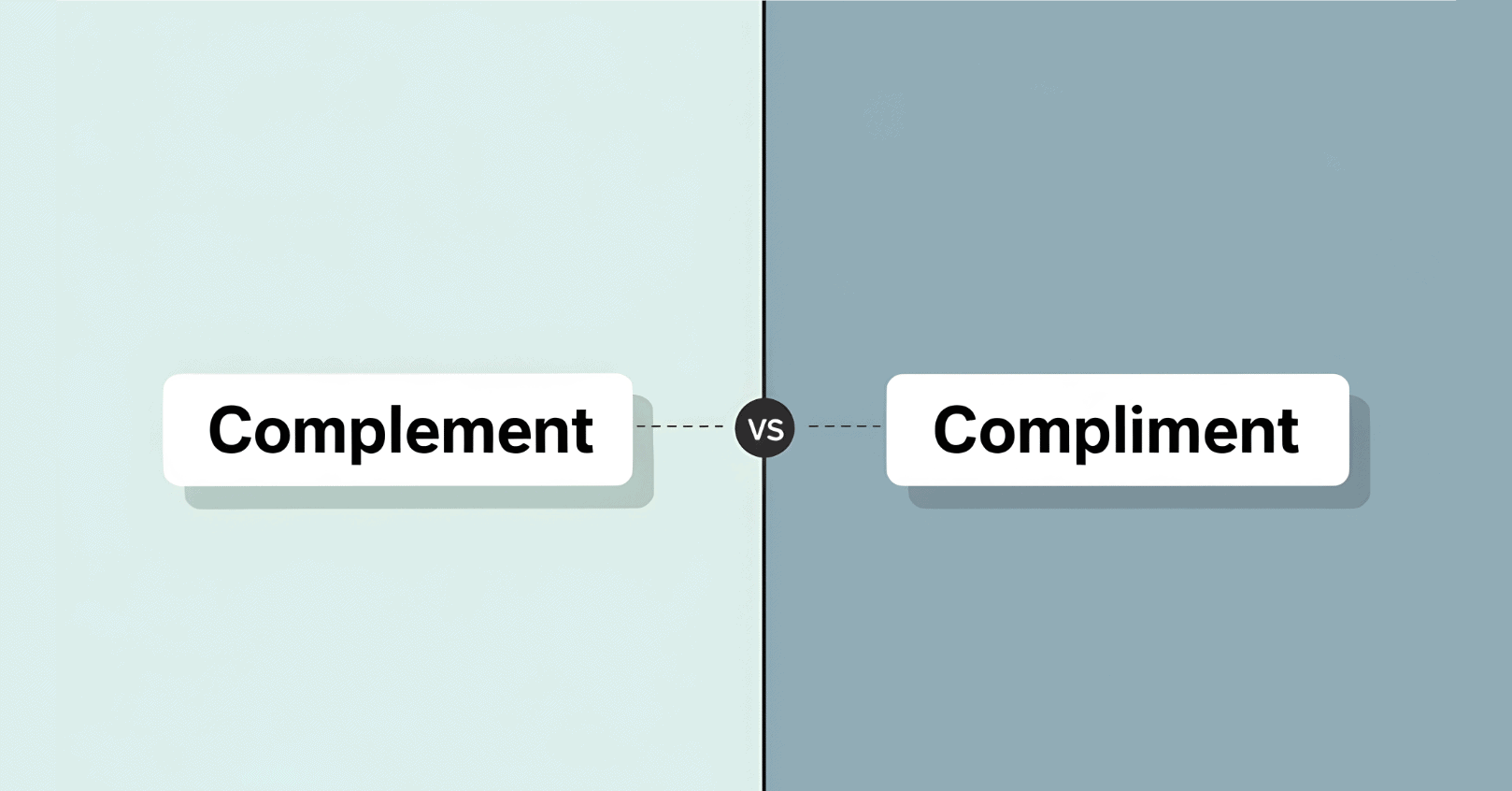
Some grammar mix-ups are forgivable—and then there’s complement vs. compliment, two words that look almost identical but have very different jobs. One completes something. The other flatters someone. Both are useful in writing—just not in the same sentence.
The Quick Answer
- Complement means to complete or enhance something by adding what’s missing.
- Compliment means to express praise or admiration.
Both share Latin roots from complere (“to complete”), but they took different career paths somewhere along the line.
Examples in Action
- Complement (to complete):
- “Her scarf complements her outfit perfectly.”
(The scarf completes or enhances the outfit.) - “The subplot complements the main story.”
(It adds depth or balance.)
- “Her scarf complements her outfit perfectly.”
- Compliment (to praise):
- “He complimented her writing style.”
(He said something nice.) - “She blushed at the compliment.”
- “He complimented her writing style.”
How to Remember the Difference
Here’s an easy trick:
- E in complement = Enhance (something works well together).
- I in compliment = I like you (something nice is being said).
Why It Matters for Writers
Mixing them up won’t destroy your credibility, but readers who notice it might lose a bit of faith in your attention to detail. For authors, that’s never a good look. Word precision signals control — and control builds confidence in your prose.
✅ Takeaway
- Complement = completes or enhances.
- Compliment = praise or flattery.
If you’re adding value, use an E. If you’re being nice, use an I. Your accessories complement your style—and your readers compliment your work. Get those two right, and your writing will be both polished and praised.













Comments